Best Wellness Treatments for Burnout
Burnout rarely arrives all at once. More often, it builds quietly — restless sleep, mental fatigue, emotional flatness, a body that feels heavy even after rest. You keep moving through your responsibilities, but underneath the productivity is a nervous system that has been running on stress for too long. That is why the best wellness treatments for burnout are not simply relaxing. They help the body recover from chronic activation in a way that feels restorative, sustainable, and real.
Burnout is more than exhaustion. It is often a mix of overstimulation, depleted energy, poor recovery, emotional strain, and a nervous system that has forgotten how to fully power down. The most effective wellness treatments work by reducing stress load, calming the body, improving sleep, and creating enough safety for the system to finally soften.
What the best wellness treatments for burnout actually support
Burnout looks different for everyone. Some people feel anxious, overstimulated, and unable to switch off. Others feel numb, detached, physically depleted, or mentally foggy. The right wellness treatment depends on what your body is asking for most — regulation, rest, recovery, sensory quiet, or emotional steadiness.
The strongest treatments usually have a few things in common. They lower physiological stress, support nervous system regulation, and require very little effort while you are receiving them. That last part matters more than people realize. If you are already exhausted, a wellness practice that feels demanding may not be what your body needs most.
Vibroacoustic sound therapy for nervous system reset
If burnout has left you feeling wired but exhausted, vibroacoustic sound therapy can feel uniquely effective because it works through the body rather than relying on concentration or mental effort. Low-frequency sound vibrations move through the body while immersive audio creates a calming sensory environment, helping the nervous system shift out of chronic vigilance.
For many people, this feels more accessible than meditation alone. You are not trying to clear your mind or perform relaxation correctly. You simply settle into the experience and allow the body to respond.
When combined with supportive elements like zero-gravity positioning, weighted grounding, blackout eye masks, or noise-canceling headphones, the effect can feel deeply regulating. Instead of forcing stillness, the environment helps guide the body toward it naturally.
Near infrared light therapy for physical recovery
Burnout is not only emotional. It often shows up physically — sluggishness, body heaviness, inflammation, poor recovery, or persistent fatigue. Near infrared light therapy is commonly used to support cellular recovery, circulation, and restoration at a deeper physiological level.
This kind of treatment is usually most effective as part of a layered recovery approach rather than a standalone fix. While it may not create the immediate emotional exhale of sensory-based therapies, it can support the body’s ability to repair and recover over time.
Massage therapy for stored physical tension
Stress accumulates physically long before many people consciously acknowledge burnout. Tight shoulders, jaw clenching, headaches, chest tension, and shallow breathing all reinforce the feeling of being “on.”
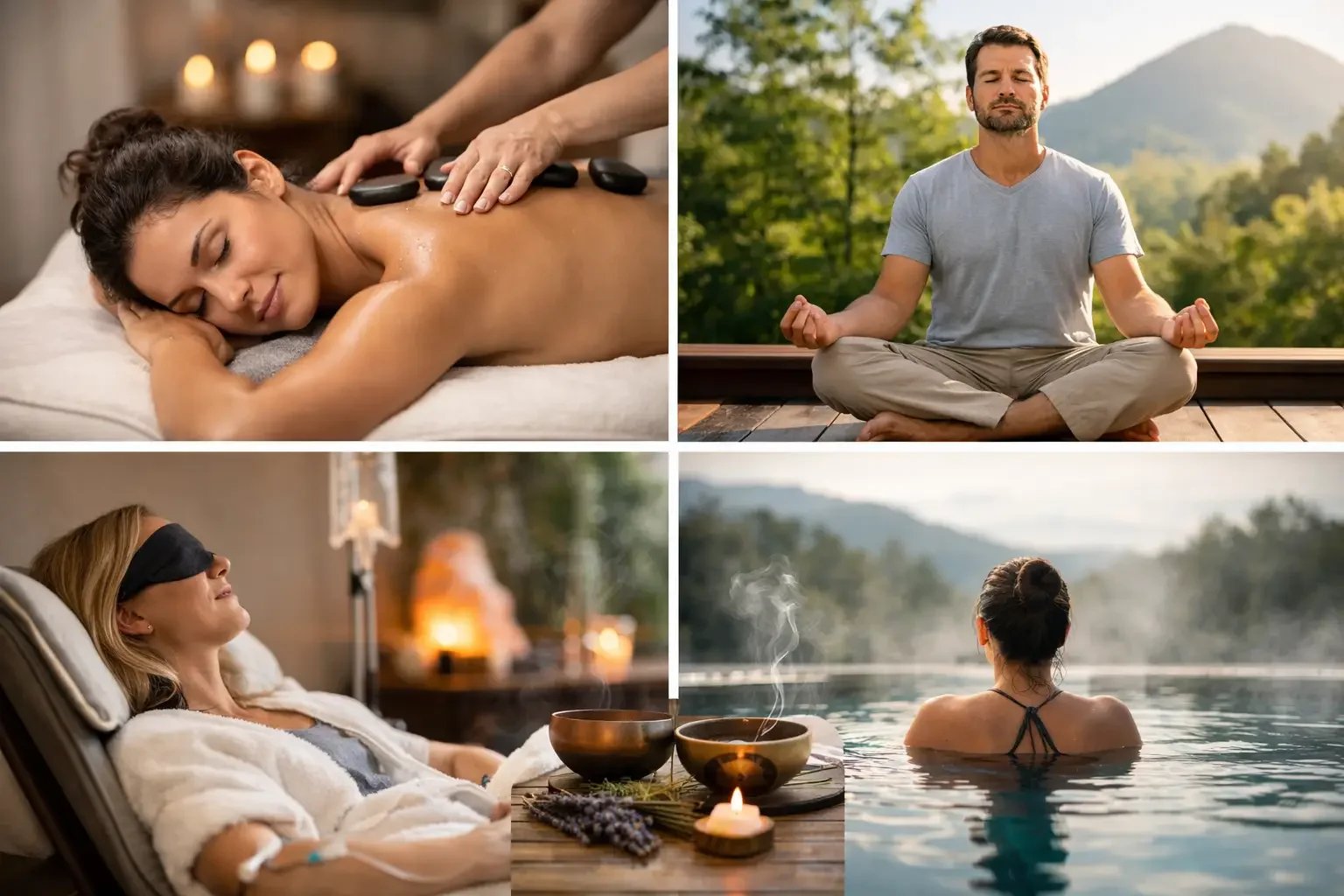
Massage therapy can help interrupt those patterns by softening muscular guarding and encouraging deeper relaxation. Many people notice improved sleep, calmer breathing, and a more grounded emotional state afterward.
The style of massage matters, though. During periods of burnout, gentler and quieter treatments are often more supportive than highly stimulating or aggressive bodywork.
Acupuncture for stress-related imbalance
Acupuncture is often sought out when burnout begins affecting sleep, digestion, headaches, hormonal balance, or chronic tension. Many people describe the experience as calming in a subtle but meaningful way — not dramatic, but deeply settling.
What makes acupuncture appealing is that it addresses stress as something embodied, not purely mental. The treatment itself encourages stillness, which can feel restorative for people whose nervous systems rarely get a break from stimulation.
That said, comfort level matters. If needles make you tense or guarded, another modality may feel more supportive initially.
Guided meditation and breathwork for mental overload
When burnout is driven by constant overthinking, decision fatigue, or emotional overwhelm, guided meditation and breathwork can help slow internal momentum and reduce stress reactivity.
But effort matters here too. Silent meditation is not always accessible for someone already deeply depleted. Guided experiences often work better because they reduce pressure and provide structure for the nervous system to follow.
This is one reason sensory-supported meditation has become increasingly popular. It bridges the gap between mindfulness and accessibility by helping the body settle first instead of demanding instant mental stillness.
Float therapy for overstimulation
For people overwhelmed by constant input, float therapy can offer profound sensory relief. By reducing light, sound, gravity, and external stimulation, the body has an opportunity to fully downshift with very little effort.
Many people describe floating as one of the few places where they feel completely uninterrupted. That can be especially restorative for caregivers, founders, creatives, or professionals living in nonstop stimulation.
Still, it depends on the person. If silence or sensory isolation feels uncomfortable, another form of guided restoration may feel safer and more supportive.
Sauna and heat therapy for relaxation and circulation
Heat therapy can be deeply soothing for an overworked nervous system. Sauna sessions often help relax muscles, improve circulation, and encourage the body to release physical tension.
Cold exposure is frequently paired with sauna in wellness culture, but burnout is not always the right moment for intense stimulation. If your system already feels depleted, aggressive cold plunges may create more stress rather than less. Gentle warmth is often the better place to start.
Sleep-focused restoration sessions for deeper recovery
One of the clearest signs of burnout is the inability to fully recover overnight. Stress and poor sleep reinforce each other, creating a cycle where the body never completely powers down.
That is why wellness treatments designed around effortless restoration can feel especially valuable. Sessions that combine immersive sound, therapeutic vibration, sensory reduction, warmth, and calming environmental cues help create the conditions for deeper nervous system recovery.
At spaces like Unwind Sound Lounge, this type of restoration is intentionally designed to feel body-led rather than performative. Vibroacoustic sound therapy, near infrared light, aromatherapy, weighted comfort, and private sensory environments work together to help overstimulated systems finally let go.
How to choose the right burnout treatment
The best treatment is not necessarily the trendiest one. It is the one your nervous system can actually receive.
If your stress feels physical and agitated, body-based therapies like massage, sound therapy, or acupuncture may help most. If you feel mentally saturated and overstimulated, sensory reduction therapies like float sessions or immersive sound environments may be more effective. If your exhaustion feels cellular and heavy, recovery-focused modalities like infrared light therapy may support rebuilding energy over time.
It also helps to choose treatments that feel sustainable. Burnout recovery usually responds better to consistency than intensity. One practice you can return to regularly is often more valuable than a dozen wellness experiences you try once.
The most meaningful wellness care does not simply create temporary escape. It helps your body remember what regulation, rest, and steadiness actually feel like again. When that happens, you do not just feel calmer for an hour. You sleep more deeply, think more clearly, and move through life with more energy available to you.
Sometimes the best treatment for burnout is not the one that asks you to do more. It is the one that finally gives your nervous system permission to stop holding everything so tightly. Book a session today.