The Difference Between Sound Bath and Vibroacoustic Therapy
If you have ever walked out of a sound bath feeling calm but noticed the effect faded quickly, you are not imagining it. The difference between a sound bath and vibroacoustic sound therapy is not just about aesthetics or atmosphere. It comes down to how sound interacts with the body, how structured the experience is, and what kind of nervous system support you are actually receiving.
Both experiences can feel deeply restorative. Both use sound to encourage relaxation and mental quiet. Both can create a pause from overstimulation and help you reconnect with your body. But they are not interchangeable — especially if your goal is deeper stress recovery, improved sleep, or a more effortless nervous system reset.
What separates a sound bath from vibroacoustic sound therapy?
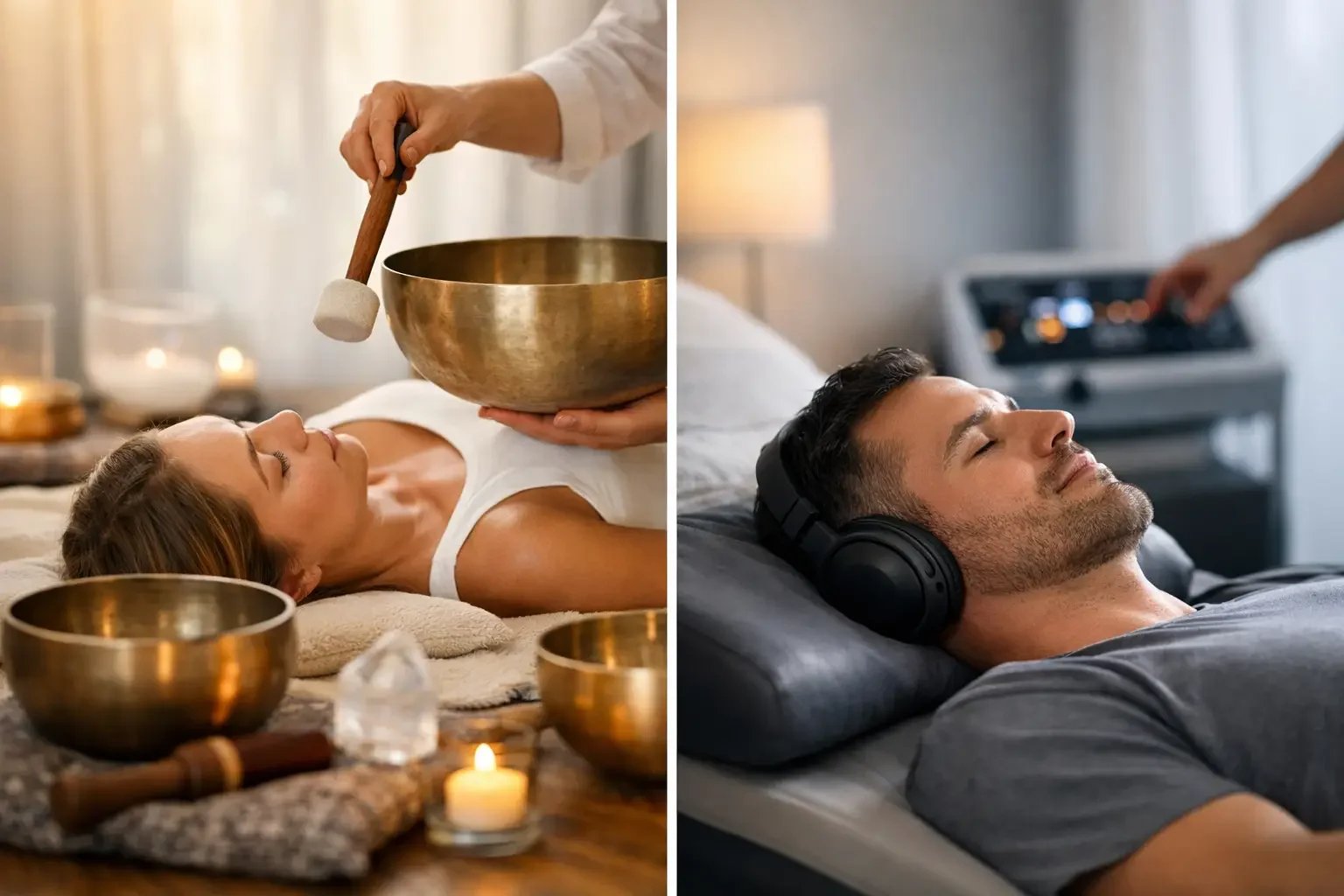
A sound bath is primarily an immersive listening experience. During a session, a practitioner typically plays instruments like crystal singing bowls, gongs, tuning forks, or chimes while participants rest quietly in the space. The experience is shaped by the sounds filling the room, your emotional response to them, and your ability to settle into stillness.
Vibroacoustic sound therapy takes a more direct, body-centered approach. Instead of only hearing sound externally, you physically feel low-frequency sound vibrations through a specialized lounge, chair, or treatment surface designed to transmit them into the body. In many modern wellness settings, the experience may also include guided meditation, light therapy, aromatherapy, weighted grounding support, or other sensory elements designed to help the nervous system relax more fully.
The simplest distinction is this: a sound bath surrounds you with sound, while vibroacoustic sound therapy allows the body to receive sound physically as vibration.
How each experience affects the nervous system
Sound baths often work through atmosphere, resonance, and emotional immersion. The tones can feel expansive, meditative, and emotionally moving. For people who naturally respond to auditory environments, this can create a deeply calming experience. There is also a ritualistic quality many people enjoy — the live instruments, the shared stillness, and the feeling of stepping outside normal routines.
At the same time, the experience can vary significantly depending on the practitioner, the acoustics of the room, and your own mental state. If your mind is racing or your body feels highly activated, it can take time to settle into the session. Some people drift into relaxation easily, while others spend much of the experience trying to quiet their thoughts.
Vibroacoustic sound therapy often reduces that barrier because the body becomes involved immediately. The low-frequency vibrations delivered through the surface beneath you create a direct physical sensation, which can help the nervous system settle without relying entirely on concentration or meditation skills.
Many people describe it as feeling like a full-body exhale. Instead of trying to relax, the body receives continuous sensory input that supports relaxation automatically.
This is one reason vibroacoustic therapy appeals to busy professionals, creatives, and people experiencing chronic overstimulation. When the nervous system has been operating in overdrive for too long, a passive, body-led approach can feel far more accessible than traditional mindfulness practices.
Why the environment changes the experience
The setting itself is another major difference between sound baths and vibroacoustic therapy.
Sound baths are often hosted in yoga studios, wellness centers, event spaces, or group environments. That communal atmosphere can feel beautiful and emotionally supportive, especially for people who enjoy shared experiences and live instrumentation. However, it can also be less predictable. Room temperature, background noise, nearby participants, and the overall energy of the space all influence how deeply someone relaxes.
Vibroacoustic sound therapy tends to happen in a more controlled environment designed specifically for nervous system regulation. In high-end wellness studios, sessions may include zero-gravity positioning, calibrated vibration, blackout support, noise-canceling headphones, and private sensory spaces created to minimize external stimulation.
That level of sensory containment is not just aesthetic — it is functional. Reducing environmental input helps the nervous system let go more quickly and with less effort.
For someone who already feels overstimulated, that distinction can make a meaningful difference.
Which works better for stress and sleep?
If your goal is general relaxation, both modalities can be effective. If your goal is more targeted — such as better sleep, stress recovery, emotional regulation, or nervous system support — vibroacoustic sound therapy often provides a more structured experience.
A sound bath may leave you feeling emotionally lighter, mentally clearer, or temporarily more grounded. But because the experience is often more fluid and less physically immersive, the results can feel more dependent on the environment and your state of mind that day.
Vibroacoustic sound therapy is often chosen for its consistency. The body receives repeatable vibrational input while the sensory environment supports relaxation in a deliberate way. For many people, this makes the experience feel more dependable from session to session.
That does not mean one is universally better than the other. Some people love the artistry, spontaneity, and ceremonial atmosphere of live sound baths. Others prefer a more private, efficient, low-effort recovery experience that fits into a demanding lifestyle.
The better question is: are you looking for an experience, or are you looking for a regulated state you can physically feel before you leave?
Which one requires less effort?
This is often the deciding factor for people who struggle with meditation or relaxation practices.
A sound bath can be passive, but it still asks you to mentally settle into the experience. If your mind tends to race, you may spend much of the session trying to quiet your thoughts before the sound begins to carry you into relaxation.
Vibroacoustic sound therapy often feels easier because the body receives a stronger physical anchor from the start. The vibrations create a tactile sense of grounding, while additional elements like weighted blankets, eye masks, infrared warmth, or noise-canceling headphones help reduce external stimulation even further.
In that sense, one modality invites relaxation, while the other is intentionally designed to facilitate it.
For people who feel mentally exhausted, overstimulated, or emotionally depleted, that difference can make relaxation feel far more accessible.
Who benefits most from each approach?
A sound bath may be the better fit if you enjoy live music, communal experiences, and a more intuitive or spiritual atmosphere. It can be especially meaningful for people who already enjoy meditation, mindfulness, or emotional sound experiences.
Vibroacoustic sound therapy may resonate more with people who want a refined, structured reset that supports recovery with minimal effort. It tends to appeal to individuals who value privacy, thoughtful sensory design, and modern wellness tools that help the body unwind without requiring active performance.
For those navigating burnout, chronic stress, sleep disruption, or nonstop mental stimulation, the added physical component of vibroacoustic therapy often makes the experience feel more immediate and restorative.
At Unwind Sound Lounge, the focus is on effortless restoration through medical-grade vibroacoustic therapy and immersive sensory support designed to help the body release tension naturally.
Why understanding the difference matters
Sound baths and vibroacoustic sound therapy are often grouped together because they both exist within the wellness space and both involve sound. But understanding the distinction helps you choose the experience that actually matches your needs.
If you are drawn to live instruments, ceremony, and spacious listening experiences, a sound bath may feel deeply nourishing.
If you want a more body-centered reset supported by physical vibration, sensory regulation, and a controlled environment, vibroacoustic sound therapy offers a more targeted approach.
Neither is inherently better. They simply serve different purposes.
Some days you may want to be immersed in sound. Other days you may want your body to be fully supported by it.
And when life feels fast, overstimulating, and mentally heavy, the most restorative experience is often the one that asks the least from you. Sometimes the nervous system does not need another practice to master. It just needs the right environment to finally let go. Book a session today.