Vibroacoustic Sound Therapy in Medicine
A busy mind rarely stays in the mind alone. It settles into the body too - tight shoulders, shallow breathing, restless sleep, a nervous system that never fully powers down. That is where vibroacoustic therapy sound vibrations in medicine begins to feel relevant. Instead of asking you to force yourself into relaxation, this approach works through sensation, using low-frequency sound vibrations throughout the body to support calm, recovery, and regulation.
For people who are overstimulated, mentally overloaded, and exhausted by wellness routines that feel like more work, that difference matters. Vibroacoustic therapy is less about “doing relaxation correctly” and more about helping the body shift into a state where rest becomes possible again.
What vibroacoustic therapy actually is
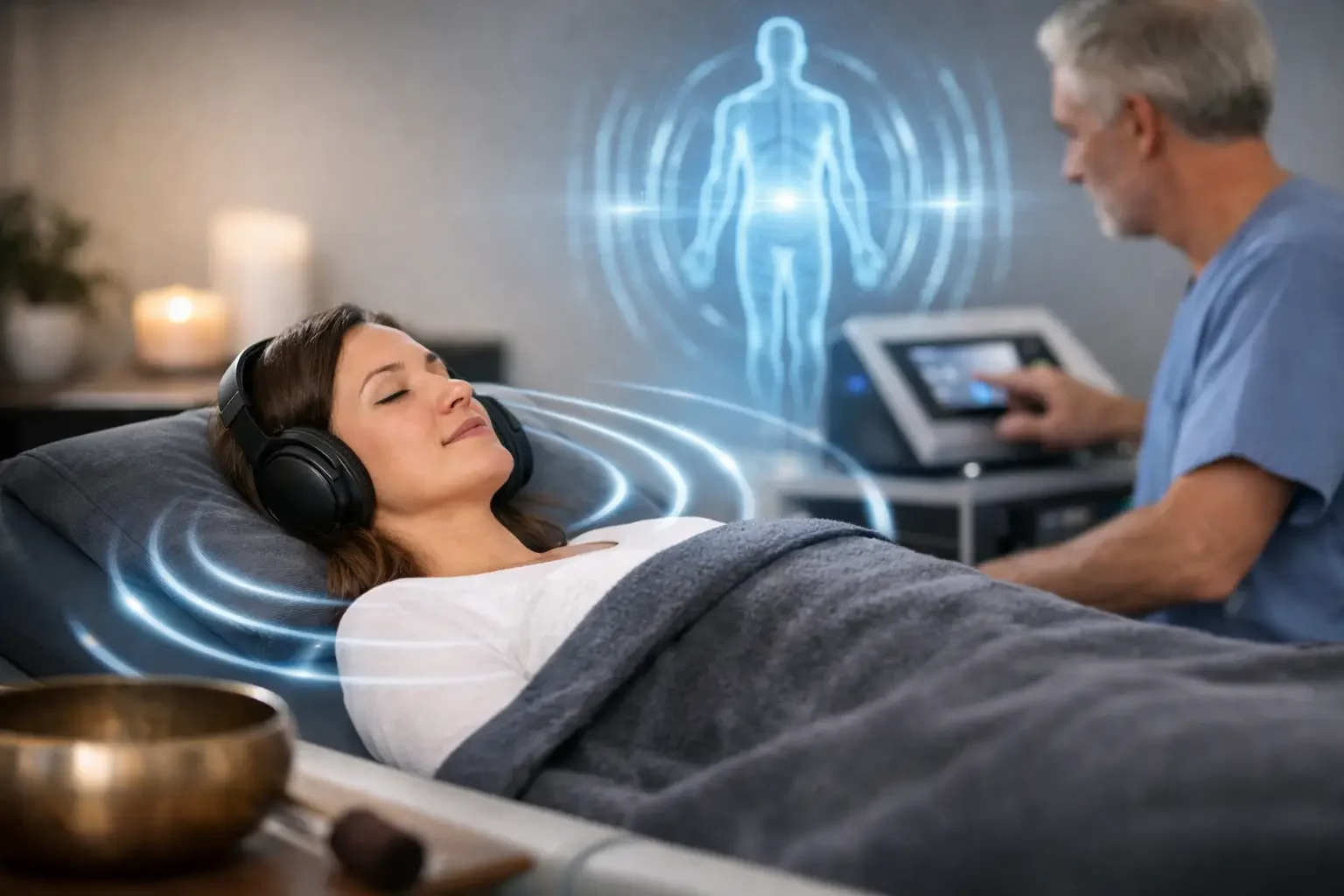
Vibroacoustic therapy uses low-frequency sound waves to create gentle vibrations that travel through the body. These frequencies are delivered through specialized loungers, sound beds, mats, or treatment chairs while curated music, tones, or guided audio plays through headphones or speakers. Rather than simply hearing sound, you physically experience it.
Many people describe the sensation as grounding, rhythmic, or deeply settling - almost like an internal massage created through vibration instead of touch.
In medical and therapeutic settings, vibroacoustic therapy has been explored as a supportive tool for stress reduction, relaxation, sleep support, muscle tension, nervous system regulation, and certain rehabilitation or pain-management applications. It is not intended to replace medical treatment, mental health care, or physical therapy when those are necessary. Instead, it functions best as a complementary modality that helps the body access a more restorative state.
That distinction is important because stress rarely exists in isolation. Sleep, tension, pain, mood, inflammation, and nervous system overload often reinforce one another. When the body spends too long in a guarded state, symptoms tend to compound.
Why sound vibrations can influence the body
The concept itself is fairly straightforward: sound is vibration. Lower frequencies can be felt physically as well as heard. When those vibrations move through the body in a controlled, rhythmic way, they may influence muscle tension, breathing patterns, relaxation response, and sensory regulation.
The nervous system responds strongly to rhythm. Breath has rhythm. Sleep cycles have rhythm. Heart rate has rhythm. Chronic stress disrupts those patterns, leaving the body feeling tense, reactive, or unable to settle. Vibroacoustic therapy introduces steady sensory input that can help guide the body back toward regulation.
For many people, this body-first approach feels easier than trying to meditate in silence. If your thoughts speed up the second you stop moving, vibration and immersive sound can provide something tangible for the nervous system to follow.
Vibroacoustic therapy sound vibrations in medicine and clinical interest
Clinical interest in vibroacoustic therapy sound vibrations in medicine often focuses on areas where stress physiology overlaps with physical or emotional symptoms. Researchers and clinicians have explored its potential role in supportive care related to anxiety, chronic pain, sleep disruption, neurological rehabilitation, stress management, and palliative care.
The research is still evolving. Some findings are promising, while other areas need more evidence and standardization. That is typical for emerging integrative therapies. Session structure, equipment quality, frequencies used, and participant needs vary widely across studies, making direct comparisons difficult.
The most balanced perspective is this: vibroacoustic therapy appears most valuable as part of a broader recovery or wellness approach, particularly for people whose symptoms are intensified by chronic stress, nervous system overload, or difficulty accessing deep rest.
You do not need exaggerated claims to appreciate the value of a modality that helps the body feel calmer, more grounded, and less defended.
Where it may help most
Stress relief is one of the clearest reasons people seek vibroacoustic therapy. Low-frequency vibration paired with immersive sound may help encourage parasympathetic activity - the state associated with recovery, digestion, and rest. Many people notice slower breathing, reduced muscle guarding, and a quieter mental state during or after a session.
Sleep support is another major draw. Poor sleep is often less about discipline and more about a nervous system that cannot fully power down. A well-designed session can help bridge the gap between overstimulation and restorative rest, especially when practiced consistently.
Physical tension may soften as well, particularly when stress is amplifying discomfort. Vibroacoustic therapy does not “fix” pain conditions directly, but helping the body move out of protective tension patterns can change how discomfort is experienced.
Many people also notice improved focus and emotional steadiness afterward. When the nervous system is less overloaded, mental clarity tends to return naturally. That is one reason busy professionals, founders, and creatives are often drawn to sound-based restoration practices. The goal is not sedation - it is feeling more resourced.
What a modern session feels like
The environment matters more than most people expect. Even advanced technology can feel ineffective if the setting itself keeps the body alert.
A thoughtfully designed vibroacoustic session may include a zero-gravity lounger or specialized sound bed, immersive audio, calibrated low-frequency vibration, and additional sensory elements such as weighted grounding, aromatherapy, near infrared light, blackout eye masks, or noise reduction.
These details are not just aesthetic. They help lower sensory friction so the body can stop scanning and start settling.
At spaces like Unwind Sound Lounge, the experience is intentionally designed to feel effortless rather than clinical or performative. You are not asked to achieve anything. You simply arrive, settle in, and allow the nervous system to respond in its own time.
Who tends to benefit most
Vibroacoustic therapy often resonates with people who:
Carry stress physically
Feel mentally overstimulated or “wired but tired”
Struggle with silent meditation
Have difficulty winding down at night
Want restorative support without talking or active effort
Need recovery that feels efficient but deeply calming
It can work especially well as part of a regular recovery rhythm - after travel, during periods of burnout, alongside demanding work schedules, or as support for better sleep and emotional balance.
At the same time, expectations should stay realistic. Someone seeking an intense or highly energizing treatment may find it subtle. People with complex medical or psychological conditions should view it as supportive care, not a standalone solution. And for some nervous systems, the benefits become more noticeable through repetition rather than a single dramatic session.
Why sound-based restoration keeps growing
The growing interest in vibroacoustic therapy reflects something larger: people are exhausted by chronic overstimulation and looking for recovery tools that feel both grounded and effective.
Modern medicine is increasingly recognizing that regulation matters. Sleep, stress response, sensory load, and nervous system balance all influence how people feel physically and emotionally day to day. Vibroacoustic therapy fits into that conversation because it works directly through the body and senses - the place where stress often lives longest.
If you have been craving restoration that feels calming without being passive, supportive without being demanding, and sensory without being overwhelming, this kind of therapy may feel surprisingly relevant.
Sometimes the most meaningful reset is not another mindset shift. It is giving your body an experience of safety, rhythm, and stillness strong enough that it finally remembers how to let go. Book a session today.