What Does Sound Therapy Do?
If your mind feels overloaded but your body feels even more exhausted — tight shoulders, shallow breathing, restless sleep, constant tension that never fully shuts off — it is natural to wonder: what does sound therapy actually do?
At its core, sound therapy helps the body shift out of stress mode and into a more regulated, restorative state. But the real impact comes from how it creates that shift. Rather than asking you to think your way into relaxation, sound therapy works through the nervous system itself, using sound, rhythm, vibration, and sensory cues to help the body feel safe enough to let go.
In more advanced forms, especially vibroacoustic sound therapy, the experience goes far beyond simply listening to calming music in a quiet room. Carefully selected frequencies and full-body vibration are used to support relaxation in a physical, tangible way. The goal is not to escape stress mentally. It is to help the body stop holding onto it.
What sound therapy does for the body
One of the primary effects of sound therapy is helping reduce the physical impact of stress. That can mean slower breathing, softer muscle tension, a steadier heartbeat, and an overall sense that the body is no longer bracing against the day.
For people constantly moving between meetings, notifications, traffic, screens, deadlines, and emotional demands, even that shift alone can feel significant.
Part of the effect comes from rhythm. The nervous system responds strongly to repetitive, predictable sensory input. Breath, music, vibration, and steady frequencies can all influence how the body regulates itself. When sound is delivered intentionally and consistently, it may help guide the body away from hypervigilance and toward a calmer physiological state.
That is one reason many people leave sound therapy sessions feeling quieter, lighter, or more grounded, even if they arrived feeling mentally scattered or physically tense.
In vibroacoustic sound therapy, sound is not only heard — it is felt. Low-frequency vibration moves through the body, creating a physical sensation that many people describe as grounding or deeply settling. For some, it feels as though the body finally receives permission to soften.
That does not mean sound therapy is a cure-all. If someone is severely burned out, chronically sleep-deprived, or navigating intense emotional stress, one session may feel supportive without being life-changing. The body often responds gradually. Sometimes the first shift is simply realizing how activated the nervous system has been for a long time.
How sound therapy supports the nervous system
The most meaningful answer to “what does sound therapy do?” is that it helps regulate the nervous system.
When the nervous system is overloaded, everything tends to feel harder: sleep, focus, patience, recovery, emotional steadiness, and even simple decision-making. Stress stops feeling temporary and starts becoming the body’s default setting.
Sound therapy creates an environment that encourages downshifting. Through vibration, frequency, rhythm, and reduced sensory stimulation, it can interrupt the cycle of constant tension and mental overactivity. Instead of forcing yourself to relax, the experience supports relaxation naturally.
That distinction matters, especially for people who struggle with traditional meditation. If your mind is racing, sitting still with your thoughts may feel frustrating rather than calming. Sound therapy tends to be more body-led. It gives the nervous system something physical and rhythmic to respond to, making calm feel more accessible.
This is also why the environment surrounding the session matters so much. A thoughtfully designed experience that combines vibroacoustic therapy with elements like near infrared light, aromatherapy, weighted blankets, eye masks, and a quiet private setting can deepen the effect significantly. Each layer reduces sensory effort, helping the body settle more fully.
What sound therapy may do for stress and sleep
Stress relief is one of the most common reasons people seek sound therapy, and for good reason. Chronic stress often hides beneath productivity. You may appear functional and capable while your nervous system remains constantly activated underneath.
Sound therapy can create a pause in that cycle.
Many people notice similar effects after a session: slower thoughts, softer breathing, less tension in the jaw or chest, and a calmer sense of fatigue rather than emotional exhaustion. That state can make it easier to fall asleep, stay asleep, and wake feeling more restored.
The sleep benefits are not mysterious. They often come from helping the body spend more time in a calmer physiological state. If your evenings are usually filled with screens, overstimulation, work stress, or difficulty switching off mentally, sound therapy can act as a bridge between intensity and rest.
Results vary from person to person. Some people sleep deeply after a single session. Others notice more gradual improvement over time, especially when sessions become part of a broader recovery routine. Stress-related sleep disruption tends to respond especially well, while more complex sleep issues may require additional support.
Can sound therapy help with focus and mood?
Often, yes — though usually indirectly.
Difficulty focusing is not always a concentration problem. Sometimes it is a nervous system problem. When the body is overstimulated, attention becomes fragmented. When stress softens, mental clarity often returns naturally.
That is why many people leave sound therapy sessions feeling clearer as well as calmer. Decisions feel easier. Creativity returns. Mental bandwidth opens back up. You may not feel transformed overnight, but you often feel more like yourself again.
Mood can shift in a similar way. A more regulated nervous system tends to support greater emotional steadiness. That may mean less irritability, reduced reactivity, and a stronger sense of balance throughout the day.
Sound therapy is not a substitute for mental health care, but it can be a valuable support for emotional wellbeing, especially when chronic stress has been draining the system for too long.
There is also something powerful about receiving care in a completely passive way. No talking. No performance. No pressure to “do relaxation correctly.” For many busy adults, that alone feels deeply restorative.
What a session may actually feel like
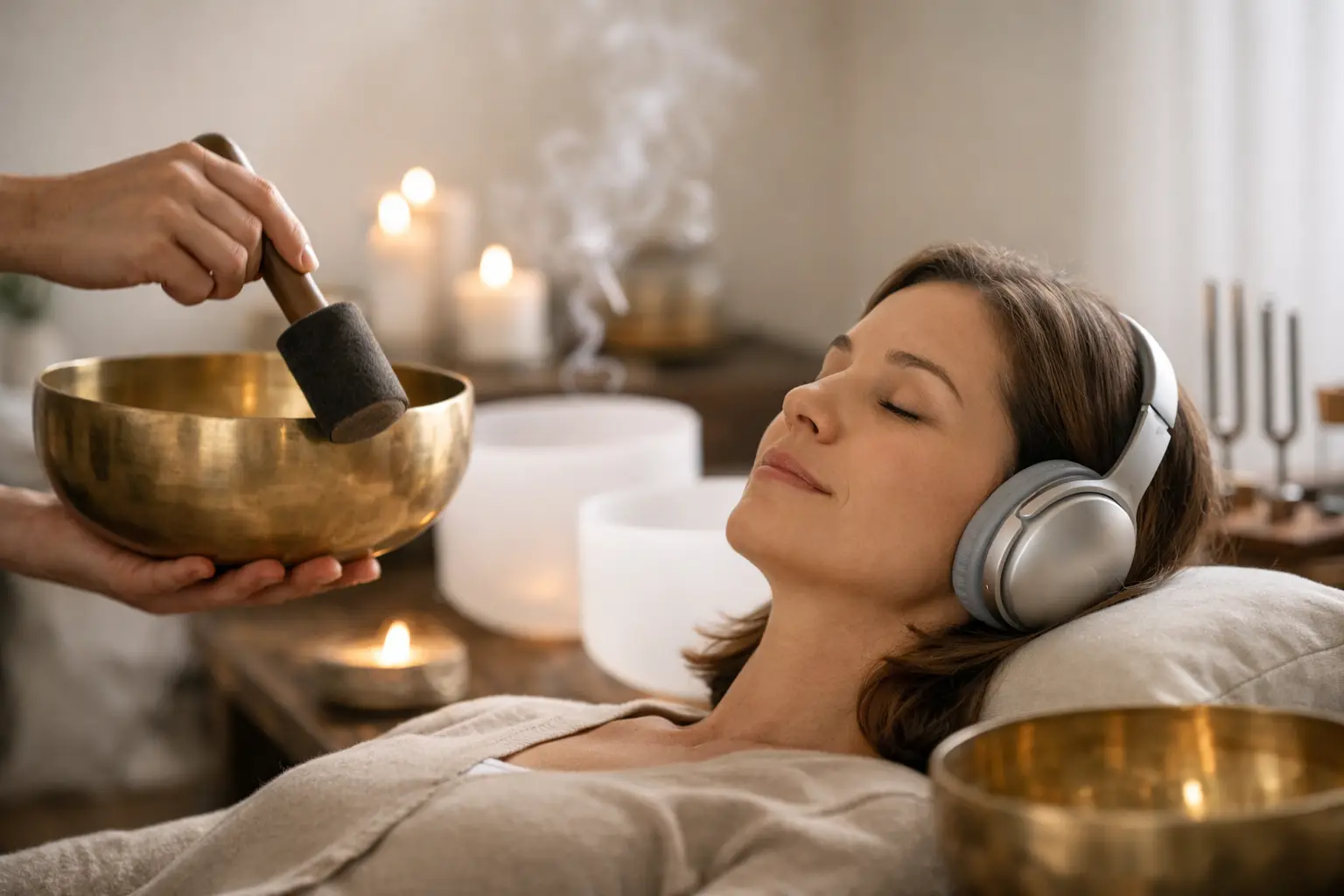
The experience depends on the type of sound therapy being used. A group sound bath with crystal bowls will feel very different from a private vibroacoustic session in a technology-enhanced wellness studio.
In a more immersive vibroacoustic experience, you may recline in a zero-gravity lounge or restorative pod while curated sound frequencies move through both the headphones and the body itself. Gentle vibration travels through the chair or bed while sensory elements like infrared light, weighted blankets, aromatherapy, and blackout eye masks help reduce external stimulation.
Rather than simply listening to sound, you are resting inside a carefully designed sensory environment.
Some people feel immediate relief within minutes. Others take longer to settle as the mind gradually catches up to the body. Both responses are normal. The nervous system tends to unwind on its own timeline.
What sound therapy does not do
It is important to stay realistic about the limits of sound therapy. It is not emergency medicine, and it is not a guaranteed solution for trauma, chronic pain, severe anxiety, or complex mental health conditions. The effects are not always dramatic, either. Sometimes the biggest changes are subtle but meaningful: deeper sleep, less tension during the day, improved patience, or a quieter mental state.
Different nervous systems also respond differently. Some people enjoy stronger sensory stimulation, while others benefit more from gentle, minimal input. The most effective experiences respect that individuality rather than promising identical outcomes for everyone.
Still, for people seeking a restorative wellness practice that does not require effort or performance, sound therapy can be remarkably effective. It offers a body-first response to a modern problem: chronic overstimulation.
And in a culture that constantly rewards pushing harder, there is something deeply valuable about choosing experiences that help you soften instead.
Sometimes healing begins not by doing more, but by finally giving your nervous system enough space to receive rest. Book a session and find out.