What is a Vibroacoustic Sound Therapy Bed?
One of the easiest ways to tell whether a wellness experience actually works is to notice how your body feels afterward. Do your shoulders relax? Does your breathing slow down? Does your mind stop racing for the first time all day? A vibroacoustic sound therapy bed is designed for exactly that kind of shift — helping the body move out of stress mode and into a more grounded, regulated state.
Unlike a traditional massage table or heated recliner, a vibroacoustic sound therapy bed combines low-frequency sound vibrations with immersive audio to create a full-body sensory experience. The goal is not performance or effort. You are not trying to meditate correctly or force yourself to relax. Instead, the session creates conditions that help the nervous system soften naturally, often more quickly than the mind can manage on its own.
How a vibroacoustic sound therapy bed works
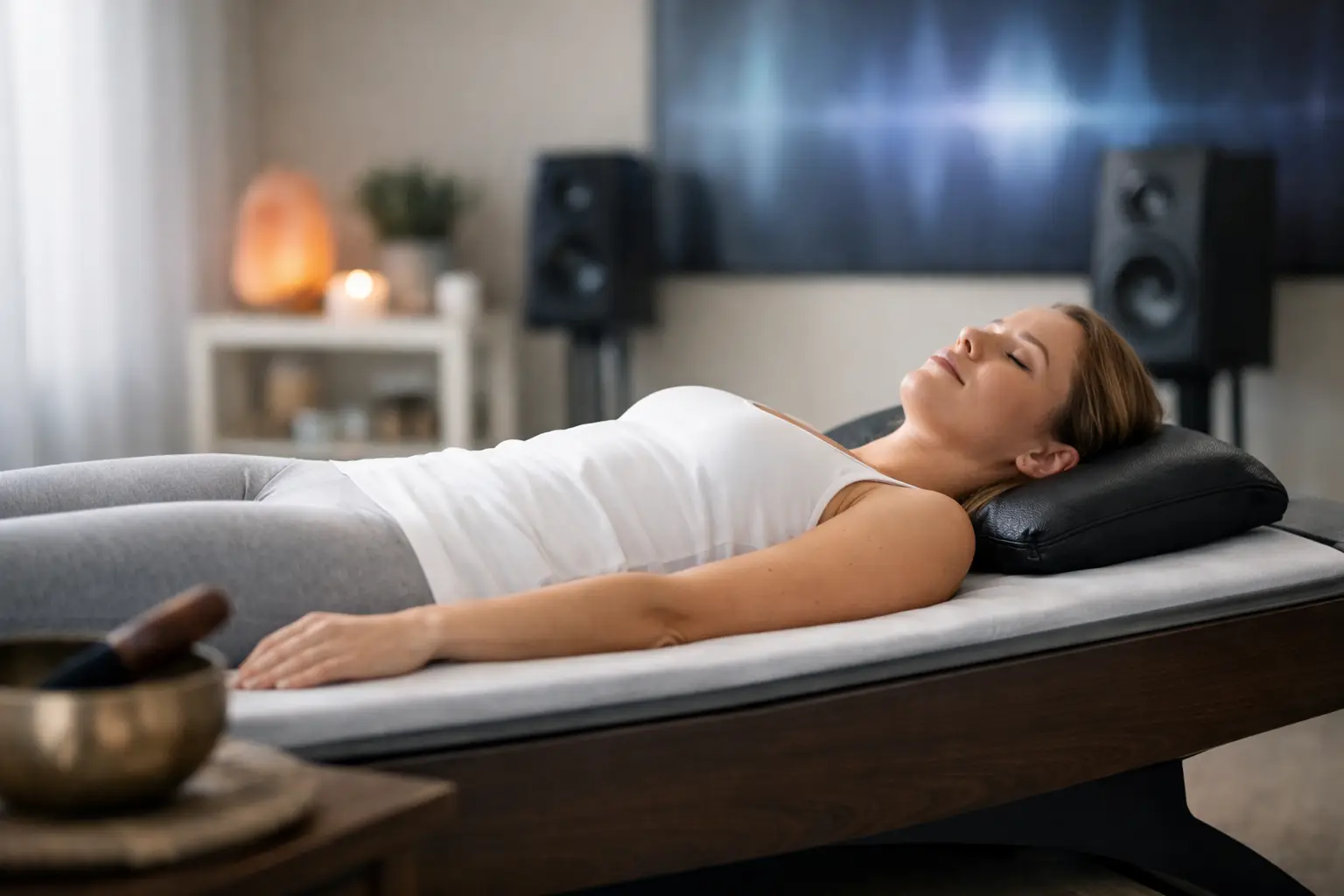
At its foundation, vibroacoustic therapy transforms sound into physical sensation. Specialized transducers built into the bed convert audio frequencies into gentle vibrations that move through the body. You hear the sound through headphones or speakers, but you also feel it traveling through areas like the back, hips, legs, and torso.
That physical input matters because the nervous system responds strongly to rhythm and repetition. When the body receives steady, intentional sensory cues, it often begins to shift away from the constant state of alertness many people carry throughout the day. For someone who feels mentally overloaded, overstimulated, or chronically exhausted, the experience can feel like moving from static into stillness.
The sensation itself is usually immersive rather than intense. It is not a mechanical massage or random vibration. High-quality systems are designed with carefully selected frequencies intended to support relaxation, restoration, and nervous system regulation. In premium wellness spaces, the experience may also include weighted grounding, aromatherapy, infrared light, blackout eye masks, or other calming sensory elements that deepen the feeling of reset.
Why people are drawn to vibroacoustic sound therapy beds
For many adults, stress is no longer occasional. It has become a constant background state. Long work hours, endless notifications, emotional pressure, poor sleep, and overstimulation can keep the nervous system activated long after the day ends. Over time, that may show up as physical tension, shallow sleep, scattered focus, irritability, or the familiar feeling of being both exhausted and unable to fully relax.
A vibroacoustic sound therapy bed appeals to people who want restoration that feels both effortless and effective. You do not need meditation experience. You do not need to talk through your stress or concentrate on the “right” breathing pattern. You simply lie back, allow the experience to support you, and let the body begin to unwind.
That body-first approach is a major part of the appeal. For busy professionals, creatives, founders, and high performers, wellness can start to feel like another task to optimize. Vibroacoustic therapy offers something different: a structured pause that helps the nervous system remember how to slow down.
What vibroacoustic sound therapy may support
People often seek vibroacoustic sessions for stress relief, emotional regulation, sleep support, and mental clarity. These outcomes tend to overlap. When the nervous system becomes less reactive, the mind often feels quieter. When physical tension softens, sleep can become more restorative. Better recovery often improves mood, focus, and resilience throughout the day.
Some people book sessions during periods of burnout, travel fatigue, or intense work demand. Others make them part of an ongoing wellness routine because the effects feel more noticeable with consistency. The experience itself can vary from person to person. Some notice an immediate sense of lightness and calm, while others experience subtler shifts at first, such as easier breathing, fewer racing thoughts, or deeper sleep later that night.
The setting also matters more than many people expect. Sound quality, privacy, comfort, and atmosphere all influence how safe and receptive the body feels during the session. A thoughtfully designed environment can transform the experience from simply relaxing into something deeply restorative.
Vibroacoustic therapy vs. massage therapy or meditation apps
While vibroacoustic therapy shares some overlap with massage and meditation, the experience is fundamentally different.
Massage therapy works through touch and manual pressure. It can be highly effective for muscular tension, but some people find physical touch overstimulating or struggle to fully relax during conversation-based sessions.
Meditation apps offer convenience, but they still rely heavily on concentration and self-regulation. On stressful days, that can feel difficult or inaccessible. A vibroacoustic sound therapy bed approaches relaxation more physically. The body receives rhythmic sensory input that can make calm feel easier to access, especially for people who struggle to sit still or quiet their thoughts on demand.
There are trade-offs, of course. Meditation apps are inexpensive and available anytime. A premium vibroacoustic session requires scheduling and typically costs more. But for many people, the immersive environment and specialized equipment create a depth of restoration that is difficult to replicate at home.
What a session typically feels like
Most sessions begin before the sound even starts. The environment becomes quieter. Lighting softens. The pace slows down. That transition alone can signal to the nervous system that it is finally safe to stop bracing.
Once settled into the bed or lounge, the experience usually layers multiple sensory elements together. You may hear ambient cinematic audio, guided meditation, or tonal soundscapes while low frequencies move gently through the body. Depending on the studio, the session may also include near infrared light therapy, weighted blankets, aromatherapy, or blackout eye masks that reduce external stimulation.
The overall effect often feels cocooning and deeply calming. Some people remain fully awake and simply feel profoundly relaxed. Others drift into a dreamlike half-sleep state where thoughts loosen and time feels less defined. Neither response is right or wrong. The purpose is not to perform relaxation — it is to give the body enough sensory support that relaxation can happen naturally.
Who benefits most from this type of therapy
Vibroacoustic sound therapy often resonates with people who appear highly functional on the outside but feel depleted underneath. If you are constantly productive, mentally switched on, or emotionally overloaded, your body may have forgotten what true rest feels like.
This kind of therapy can be especially appealing for people who feel overstimulated by modern life, struggle to unwind at night, or want an alternative to traditional spa treatments that feels more modern and immersive. It also tends to attract people interested in wellness technology who still want an experience that feels warm, calming, and human rather than clinical.
At the same time, expectations should stay realistic. Vibroacoustic therapy is not a replacement for medical care, mental health support, or comprehensive treatment when those are needed. It works best as part of a broader recovery practice that may also include movement, therapy, healthier boundaries, hydration, and consistent sleep habits.
Why the environment matters
Not all vibroacoustic setups create the same experience. Consumer products can introduce the concept, but factors like sound quality, ergonomic support, and atmosphere make a significant difference. If the equipment feels uncomfortable or the space feels noisy and rushed, the nervous system may never fully let go.
A thoughtfully designed boutique studio changes the experience entirely. When the technology, sensory design, and environment are intentionally curated, the session feels less like testing a wellness gadget and more like entering a true restoration ritual.
For people carrying chronic stress, that distinction matters. Atmosphere is not an extra detail. It is part of what allows the body to feel safe enough to downshift.
Is a vibroacoustic sound therapy bed worth trying?
If your version of rest currently looks like scrolling through your phone in bed, working through meals, or telling yourself you will recover later, then a vibroacoustic sound therapy bed may absolutely be worth exploring. Not because it is trendy, but because many people need support that reaches the body before the mind is ready to cooperate.
The best wellness experiences do not demand that you become someone different. They simply help you return to yourself with less tension, less noise, and more space to breathe.
Sometimes restoration does not require more effort. It requires the right environment, the right sensory inputs, and enough stillness for the body to finally remember how to exhale. Book a session to find out.