What is Vibroacoustic Sound Therapy?
You can usually tell when your nervous system is overloaded. Your shoulders stay tense, your thoughts keep cycling, and even rest can feel strangely difficult. That is often the point when people begin asking: what is vibroacoustic sound therapy, and why do so many people leave a session feeling calmer, lighter, and more mentally clear?
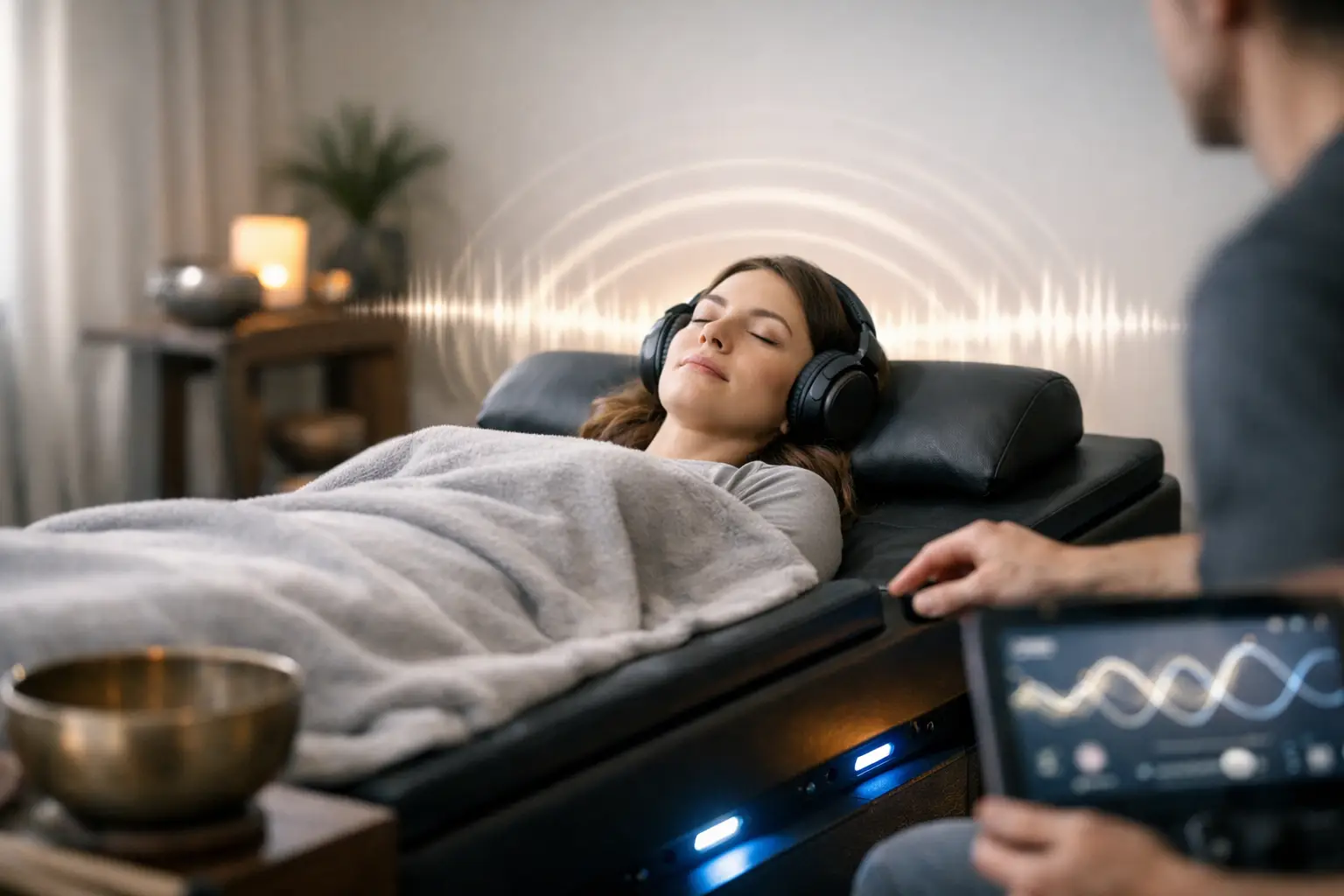
Vibroacoustic sound therapy is a wellness practice that uses low-frequency sound vibrations delivered through the body, typically through a specialized chair, table, mat, or lounge, while curated audio plays through headphones or speakers. Rather than working through the mind first, it works through sensation. The body experiences sound as vibration, and that physical input can help guide the nervous system from a heightened stress response into a more regulated state.
At its best, the experience feels supportive rather than performative. You do not need meditation experience or any special breathing technique. You simply settle in, allow the frequencies to move through the body, and let the session create space for restoration.
What vibroacoustic sound therapy does in the body
At its core, vibroacoustic therapy combines two elements: audible sound and physical vibration. Low-frequency sound waves are transmitted through the body in a controlled way, often through medical-grade equipment designed to encourage relaxation and recovery. Music, tones, or guided meditation may also be layered into the experience to shape the emotional and mental atmosphere.
This matters because the nervous system responds strongly to rhythm, repetition, and sensory input. When vibration is steady and intentional, many people notice shifts in breathing, muscle tension, mental activity, and overall feelings of safety within the body. That shift is one reason vibroacoustic sessions are commonly used to support stress relief, sleep, emotional regulation, and recovery from burnout.
Stress is not only mental. It also shows up physically through shallow breathing, clenched muscles, tight hips, racing thoughts, and the constant feeling of being “on.” Vibroacoustic therapy works directly with that physical layer instead of asking the mind to solve it first.
What a session feels like
Many first-time clients expect something dramatic, but the experience is usually subtle and grounding. You may notice pulsing, humming, or wave-like vibrations moving through the back, legs, or entire body, depending on the equipment being used. Some frequencies feel deep and grounding, while others feel spacious and calming, almost as if the body is remembering how to fully exhale again.
The environment also plays a major role. In a thoughtfully designed studio, the technology is only one part of the experience. Features like a zero-gravity lounge, blackout eye mask, weighted blanket, noise-canceling headphones, near infrared light, and botanical aromatherapy can help reduce sensory overload and make it easier for the body to settle. The goal is not stimulation. It is the removal of effort.
That is part of why this modality resonates with busy professionals and high performers. For people who feel mentally overextended or constantly overstimulated, a body-led reset can feel far more accessible than trying to think their way into calm.
Why people seek vibroacoustic sound therapy
One of the biggest reasons people try vibroacoustic therapy is nervous system restoration. Sessions are often sought out by people who feel wired but exhausted, emotionally stretched thin, mentally foggy, or unable to fully relax into sleep. By helping the body shift out of hyperarousal, the experience can leave people feeling calmer, more focused, and emotionally steadier afterward.
Sleep support is another common reason. When the body carries unresolved tension and the mind never fully slows down, sleep can become shallow or inconsistent. A deeply restorative session may help reduce that activation and support better sleep later, especially when practiced consistently.
Some people also use vibroacoustic therapy to support meditation. Traditional meditation can feel difficult when the nervous system is already overstimulated. Vibroacoustic sessions give the body something tangible to follow, which can make meditative states feel more natural and less forced.
What vibroacoustic sound therapy is not
Vibroacoustic therapy is not a cure-all, and it is not a replacement for medical care, mental health treatment, or physical therapy when those are needed. It is also different from a traditional sound bath. While sound baths typically focus on listening to instruments like crystal bowls, gongs, or chimes in a group setting, vibroacoustic therapy delivers sound as physical vibration through specialized equipment.
It also differs from massage therapy. Massage works through touch and manual pressure, while vibroacoustic therapy works through frequency and vibration. Some people prefer it because it feels less invasive and requires no conversation, no undressing, and no active participation.
The results are also highly personal. Some people feel deeply relaxed immediately, while others notice more subtle effects later, such as improved sleep or feeling less reactive the following day. As with most nervous system practices, consistency often matters more than chasing a dramatic first experience.
What the science suggests
Research into vibroacoustic therapy is still evolving, but interest in the modality continues to grow because of how sound and vibration may influence relaxation, mood, pain perception, and autonomic nervous system balance. Low-frequency sound has been explored in settings related to rehabilitation, stress reduction, and supportive care.
A grounded perspective is that vibroacoustic sound therapy can be a meaningful restoration tool, especially when delivered through quality equipment in a carefully designed environment. It may help the body shift states more easily, though the exact experience depends on the frequencies used, the session structure, and the individual receiving it.
In other words, it is not magic. It is intentional sensory input that can help the body reconnect with a sense of regulation and ease.
Who tends to benefit most
People living under sustained stress often respond especially well. That includes founders, creatives, caregivers, executives, and anyone navigating constant decision-making, screen time, deadlines, or emotional load. If your default pattern is pushing forward until your body forces a pause, this kind of session can feel like a healthier interruption.
It can also appeal to people who want restoration without the social energy of a fitness class or the intensity of a clinical environment. The experience is quiet, private, and low effort. You arrive as you are, settle in, and receive.
For many people, the deeper value is not just feeling relaxed during the session. It is reconnecting with what a regulated body actually feels like. Once you recognize that sensation again, it becomes easier to notice when stress begins pulling you too far into overdrive.
What to look for in a quality experience
Not all vibroacoustic sessions are created equally. The equipment matters, but so does the overall curation. A thoughtful experience considers sound design, body comfort, pacing, and the atmosphere of the space itself. If the environment feels rushed or overly clinical, the nervous system may struggle to fully settle.
Look for a studio that approaches restoration as a complete sensory experience rather than simply offering a device. Medical-grade vibroacoustic technology, intentional audio programming, and supportive wellness elements can work together to create an experience that feels immersive, calming, and deeply restorative.
Is vibroacoustic sound therapy worth trying?
If your stress feels deeply physical, the answer is often yes. This is especially true if you want something restorative that does not require you to “perform” wellness or become instantly good at meditation. Vibroacoustic sound therapy meets the body through sensation first, then allows the mind to follow.
For some people, it becomes an occasional reset. For others, it becomes part of a consistent wellness ritual that supports sleep, focus, and emotional balance. Either way, its value lies in its simplicity: it offers a sensory-rich way to help the nervous system recover when life has become too demanding.
Sometimes the most effective form of care is the one that asks the least from you. You lie back, breathe, feel the sound move through your body, and leave with a little more space inside yourself. Book a session to find out.