How to Find Vibroacoustic Sound Therapy Near Me
If you’ve searched for vibroacoustic sound therapy near me, you’re probably not looking for another wellness trend to research. You’re looking for something that genuinely helps you feel better — something that quiets the mental noise, softens physical tension, and gives your nervous system a chance to reset.
For many people, that search begins after stress has already become physical. Tight shoulders. Restless sleep. Constant mental chatter. Irritability. The feeling that even downtime never fully restores you. Vibroacoustic sound therapy stands out because it approaches stress through the body first, rather than asking the mind to work harder to relax.
One of the biggest reasons people are drawn to it is its simplicity. You do not need meditation experience, breathwork training, or the ability to “switch off” your thoughts. You settle in, allow the session to support you, and let sound and vibration guide the body toward a calmer state.
What vibroacoustic sound therapy actually is
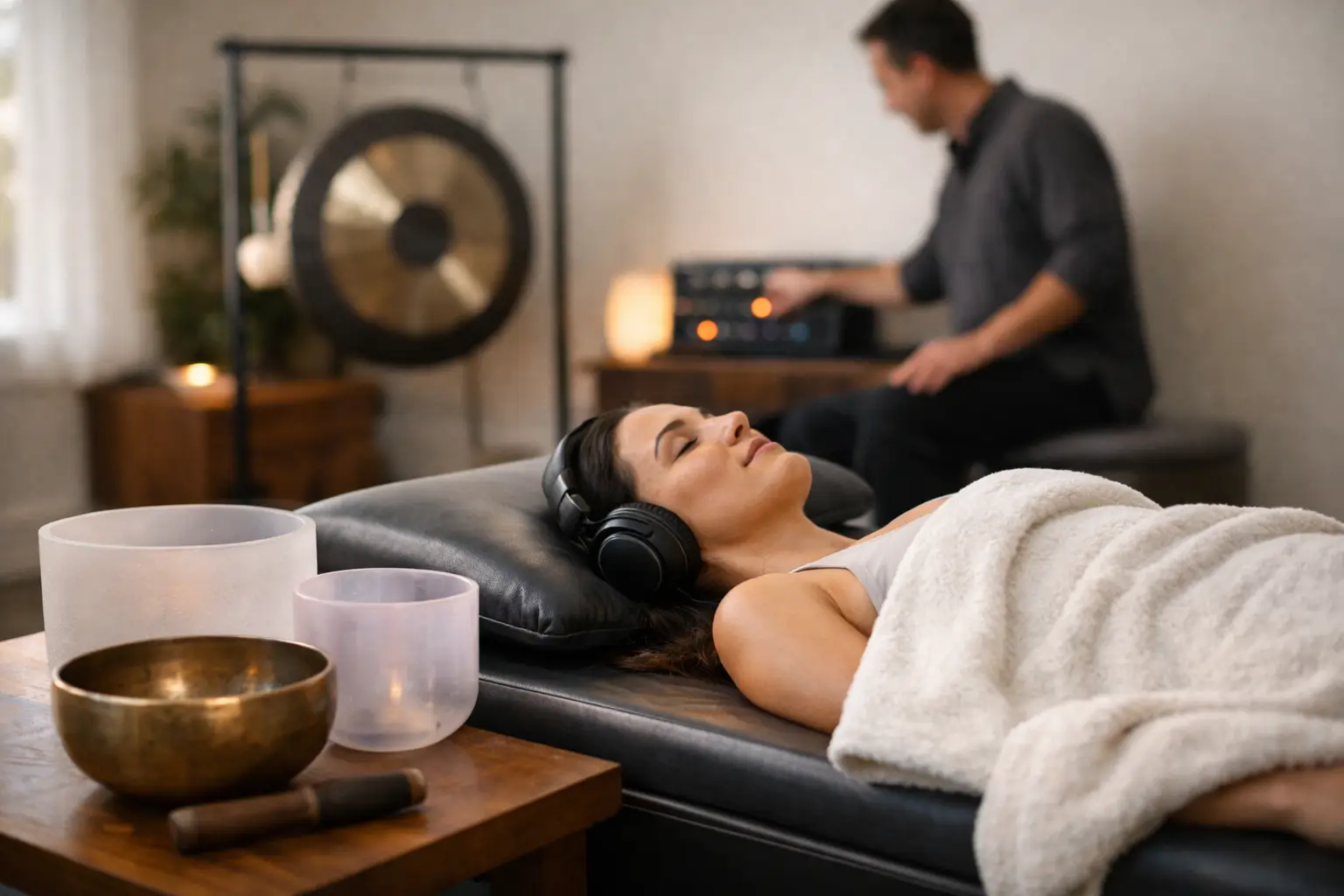
Vibroacoustic sound therapy uses low-frequency sound vibrations delivered through a specially designed chair, bed, table, or lounge while curated audio plays through headphones or integrated speakers. The experience is both auditory and physical. You do not just hear the sound — you feel it moving through the body.
That tactile component is what makes vibroacoustic therapy different from a traditional sound bath or relaxation playlist. Instead of sound staying external, vibration travels directly through muscles, breath, and the nervous system itself. Many people describe the experience as grounding, cocooning, or deeply regulating, especially when paired with a thoughtfully designed environment.
In premium wellness spaces, vibroacoustic sessions are often enhanced with additional nervous system support tools such as near infrared light therapy, aromatherapy, weighted blankets, blackout eye masks, and noise-canceling headphones. When these elements work together intentionally, the session feels less like a treatment and more like an immersive reset.
Why people search for vibroacoustic sound therapy near them
Most people are not searching out of casual curiosity. They are searching because their current recovery routine is no longer enough.
Maybe you have tried massages, meditation apps, supplements, or occasional spa visits, but your stress still lingers beneath the surface. Maybe your work requires constant focus and output, and by the end of the day your nervous system still feels activated. Vibroacoustic therapy can feel especially relevant because it meets you exactly there — overstimulated, exhausted, and not interested in doing more work to relax.
The appeal is also practical. A session can fit into a busy schedule without demanding a full day of recovery time. Even a 45-minute experience can create the kind of deep exhale people often struggle to access on their own, particularly when high-functioning stress has become their normal state.
That said, expectations matter. Vibroacoustic therapy is not a cure-all, and each person experiences it differently. Some people notice a clear shift after one session, while others feel the greatest benefit through regular use, especially when stress and burnout have been building for a long time.
What to look for in a local studio
When searching for vibroacoustic sound therapy near you, the environment matters almost as much as the technology itself. This is a nervous system experience, which means the body responds to the full atmosphere surrounding the session.
Full-body immersion matters
Some wellness spaces offer basic sound equipment with minimal tactile feedback. Others use specialized or medical-grade vibroacoustic systems designed for precise, full-body immersion. If you are looking for something truly restorative rather than novelty-driven, the setup should feel intentionally built for deep relaxation.
Zero-gravity lounges, dedicated sound beds, or private wellness pods often create a more supportive experience than a simple chair in a shared room. Comfort is not a luxury here. It is part of the therapeutic effect.
Privacy changes the experience
If your goal is nervous system restoration, privacy can make a meaningful difference. Quiet, private, or semi-private environments allow the body to downshift more easily than busy, highly social wellness spaces. For many professionals, creatives, and high performers, that sense of protected space is part of what makes the session feel deeply restorative.
The atmosphere should feel calming, not clinical
A premium wellness studio can feel polished without feeling cold. The best spaces combine advanced technology with thoughtful sensory design, creating an experience that feels elevated, warm, and calming at the same time. Lighting, acoustics, scent, cleanliness, and even the arrival experience all contribute to how quickly the body begins to settle.
Session design matters
Vibroacoustic therapy is more than simply turning on vibration. The most effective sessions are carefully layered. The audio selection, session pacing, body positioning, and added wellness modalities should all support the same outcome: helping the nervous system soften and regulate.
What a session may feel like
If you are new to vibroacoustic therapy, the experience is usually gentler than people expect. Most sessions begin with getting comfortable in a lounge, sound bed, or pod, often with added sensory elements that reduce outside stimulation. Once the session starts, low-frequency vibrations move through the body while audio plays through headphones or speakers.
Some people notice their breathing deepen first. Others feel their jaw relax, their chest soften, or their legs become pleasantly heavy. Many drift into a dreamlike state where they are not fully asleep but no longer mentally gripping the day.
Not every session feels dramatic in the moment. Sometimes the shift becomes clearer afterward through better sleep, calmer thinking, reduced tension, or a steadier emotional state. Regulation often feels subtle before it feels transformative.
Who tends to benefit most
Vibroacoustic sound therapy can be especially supportive for people who feel mentally overstimulated, physically tense, emotionally drained, or chronically under-rested. It often resonates with people who want support without adding another demanding wellness practice to their lives.
Busy professionals, founders, caregivers, creatives, and wellness-conscious clients often appreciate the passive nature of the experience. You do not need to perform, achieve, or force yourself into relaxation. You simply arrive and receive.
It can also be valuable for people who feel disconnected from their bodies. Because the therapy works through physical sensation, it may feel more accessible than approaches that rely entirely on concentration or mental stillness.
Is a premium experience worth it?
Price is often one of the first comparisons people make when searching for vibroacoustic sound therapy near me. That makes sense, but the real value goes beyond session length. What matters most is how effectively the experience helps your body shift into a calmer state.
A premium session typically includes higher-quality equipment, stronger sensory design, greater privacy, and a more refined environment overall. You are not simply paying for vibration. You are paying for the conditions that help your nervous system feel safe enough to let go.
For people seeking efficient, elevated restoration, that distinction can make a significant difference. A thoughtfully designed space that prioritizes comfort, immersion, and nervous system support often creates a much deeper experience than a basic wellness add-on.
Questions to ask before booking
Before choosing a studio, it helps to ask a few practical questions. Is the experience private or shared? What type of vibroacoustic equipment is used? Are additional modalities included, such as infrared light, aromatherapy, or weighted support? How long is the session, and is it guided?
You do not need an extensive checklist. You simply want enough clarity to know whether the space is designed for genuine restoration or offering a more casual wellness experience.
The right session should feel calming before it even begins.
A truly restorative experience does more than fill an hour in your schedule. It gives your body an opportunity to remember what ease feels like again — and that can change the way the rest of your week feels. Book a session and see.